
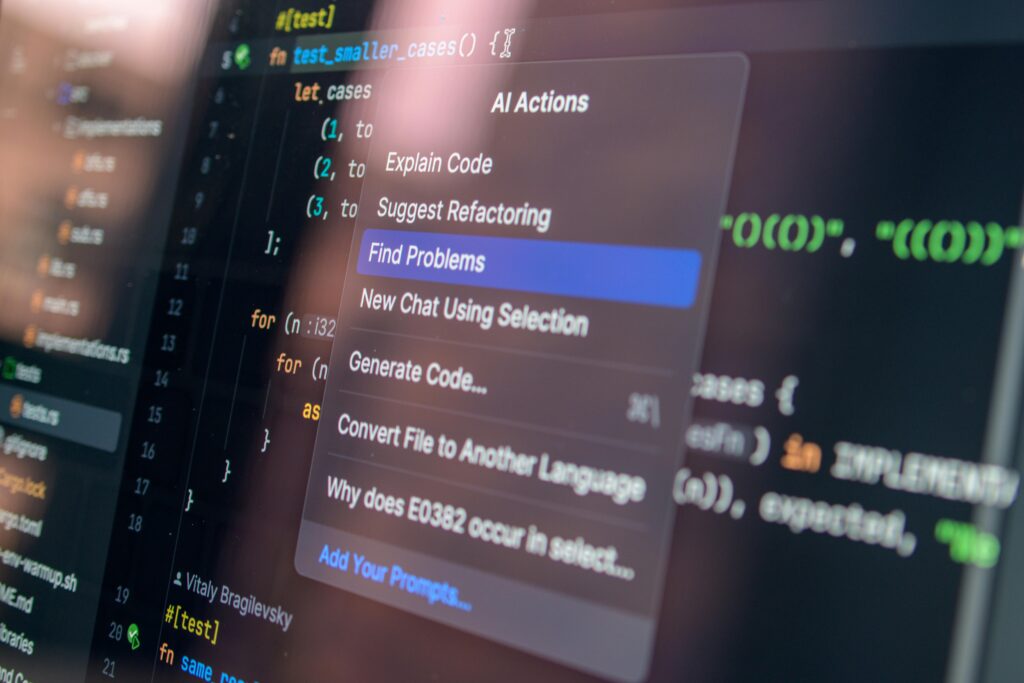
AI in the workplace is changing how IT departments operate — not gradually, but fundamentally. From automated code review and network monitoring to predictive incident response and infrastructure provisioning, AI is revolutionizing how IT teams support modern business operations.
AI can be both a game-changer and a disruptive force. Let’s unpack what that means for IT professionals and decision-makers alike.
1. Smarter Incident Management
AI-driven tools like AIOps (Artificial Intelligence for IT Operations) monitor system logs, performance metrics, and user behavior to detect anomalies before they become outages. This proactive approach reduces downtime, speeds up root-cause analysis, and helps IT teams move from reactive to strategic.
2. Automated Ticket Triage
In large help desk environments, AI-powered service desks can classify, prioritize, and even resolve L1 support tickets automatically. Natural Language Processing (NLP) enables chatbots to interpret user issues and recommend fixes — freeing IT staff for more complex troubleshooting.
3. Enhanced Cybersecurity
Machine learning models can flag unusual patterns in user behavior, network traffic, and access attempts — offering early warning of potential security breaches. AI-powered threat detection and response tools are becoming staples in modern Security Operations Centers (SOCs).
4. Improved DevOps Pipelines
AI helps optimize CI/CD processes by predicting build failures, automating code testing, and suggesting performance improvements. In large-scale development teams, AI tools can conduct intelligent code reviews and even suggest patches or refactorings.
5. Cost Optimization in the Cloud
AI algorithms are increasingly used in cloud cost management — identifying underutilized resources, recommending right-sizing strategies, and forecasting usage patterns to optimize spending.
1. Skill Redundancy and Job Shifts
Automation of routine IT tasks — like system monitoring, patching, and basic troubleshooting — can make certain roles obsolete. Entry-level sysadmin jobs, for example, may shrink as AI handles tasks once reserved for junior staff.
2. Black Box Systems
AI-driven IT solutions often come with limited explainability. For example, an AI may flag a server as “at risk” without offering a clear reason. This lack of transparency can complicate trust and make troubleshooting harder instead of easier.
3. Data Dependency and Privacy Risks
AI systems thrive on data — logs, user actions, configurations. But aggregating and analyzing this data raises privacy concerns, especially when monitoring employee behavior or internal communications.
4. Tool Overload
The growing number of AI-based tools — each promising automation and insight — can overwhelm IT teams. Poor integration between tools can lead to silos, inconsistent data, and increased complexity instead of simplification.
5. Bias in Decision-Making
Even in IT environments, AI systems can embed bias. For example, automated resume screening tools or performance analytics might misclassify or unfairly penalize certain groups if trained on flawed data.
For IT departments, the integration of AI isn’t just a tech upgrade — it’s a cultural and operational shift. Here’s how IT leaders can implement AI without alienating teams or sacrificing integrity:
In the IT workplace, AI isn’t just a concept — it’s a catalyst for transformation. It can optimize operations, reduce errors, improve response times, and elevate IT from a cost center to a strategic business asset.
But to unlock that potential, leaders must move deliberately. That means recognizing AI’s limits, maintaining ethical guardrails, and preparing their people for a workplace where humans and machines work side by side.
The smartest IT departments won’t ask “Will AI replace us?” — they’ll ask “How can AI make us better?“